This guide explains how “ePayslips >@ Grz Gov Zm” can be used for secure payroll document access and what to check before downloading. It reviews the background of ePayslip systems, why government-hosted portals matter, and how users can verify account readiness, authentication steps, and typical troubleshooting without relying on unverifiable claims.
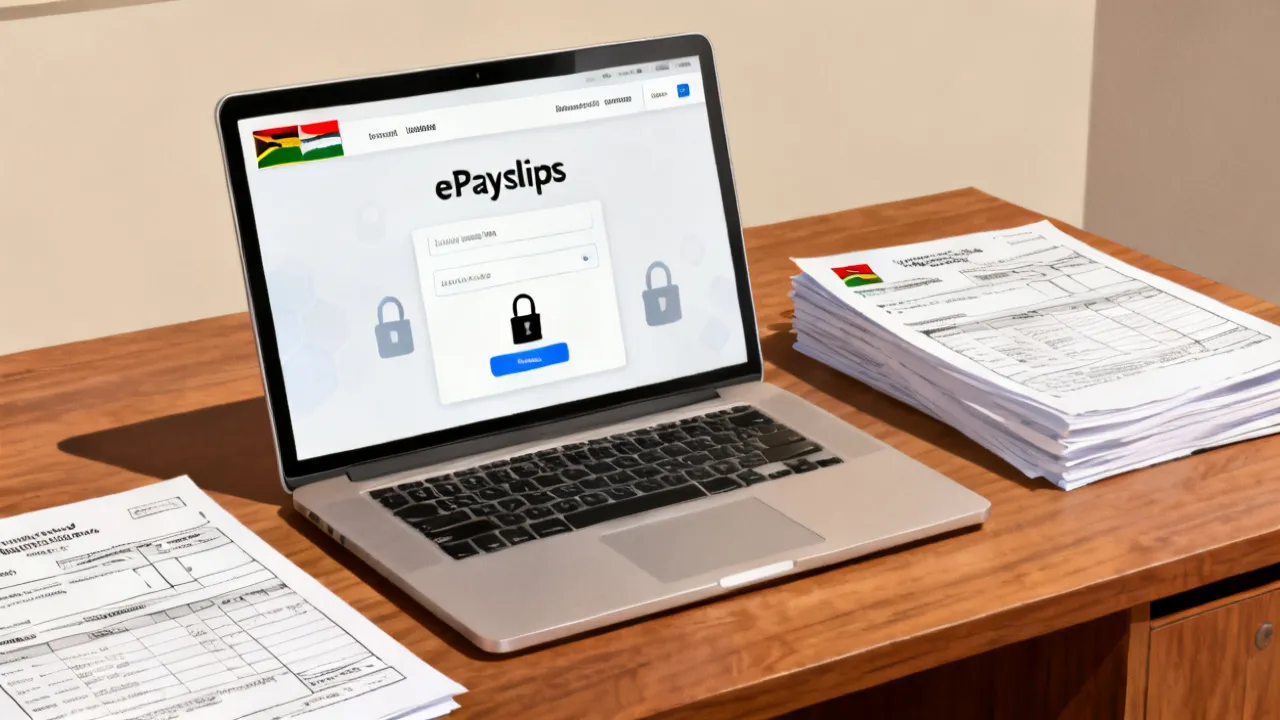
If you are trying to access government payroll documents through “ePayslips >@ Grz Gov Zm”, the core idea is simple: you’re looking for a government-hosted ePayslips access point to view or download your payslip records. In practice, users usually need to confirm correct portal entry, identity/account readiness, and secure login before any document can be retrieved.
Because payroll documents are sensitive, the safest approach is to treat every step—opening the correct portal, authenticating properly, and verifying the retrieved file—as part of an end-to-end security workflow. That mindset reduces common issues such as “wrong page,” “no records found,” and repeated login failures.
It’s also important to understand what that phrase likely represents in everyday use. People often search using partial strings or shorthand that resembles what they saw in a message from HR, payroll, or an internal poster. The text you provided looks like it may combine the service name (ePayslips) with a hint about a government domain or hosting environment (the “Grz Gov Zm” portion). Even when that shortcut is helpful, it should never replace official instructions for the correct portal address and login method.
In many government environments, payroll documentation has moved from paper folders to digital workflows for accessibility, auditability, and faster retrieval. The keyword string you provided—“ePayslips >@ Grz Gov Zm”—reads like a reference to an ePayslips entry route hosted under a government domain (commonly abbreviated in user searches).
From an industry perspective, government payroll systems typically aim to balance three needs:
When people search for phrases like “ePayslips >@ Grz Gov Zm”, they’re usually trying to find the portal location that provides the intended access rather than a third-party site. That’s why the “government-hosted” aspect matters as much as the login itself.
However, abbreviations and search shorthand can be ambiguous. Different sites might use similar words, and scammers sometimes rely on the fact that many users search using incomplete phrases. So the “likely meaning” is: you want a legitimate government portal, but you still must validate the portal URL and login flow before entering credentials.
Before you click “download” or open a PDF, the very important step is to confirm that your access attempt is technically consistent with how the service is designed. A reliable experience depends on a few conditions:
Start by ensuring you’re using the right ePayslips portal route referenced by the keyword query. If you land on a generic page, a mismatch in portal paths can lead to missing features, incorrect prompts, or dead ends. For example, a site might have a login page, but the “download” feature might be located under a different app path that you only reach after authentication.
Also check that your browser session is stable—some failed logins are caused by interrupted sessions rather than incorrect credentials. If you recently changed your password, cleared cookies, or used a different device, your session may be inconsistent. In many secure systems, you should fully log out and then log in again from a clean session rather than trying to reuse an older session.
Practical verification steps include:
Very payroll portals require a combination of credentials and/or identity checks. If the portal expects a specific username format, email mapping, or employee identifier linkage, using a partially incorrect identifier can produce “access denied” or empty results.
This is a common point of failure. People often have multiple identifiers: HR may store an employee code, a different system may use a personnel number with leading zeros, and yet another internal directory may use an email. If the ePayslips portal expects one specific form and you provide a different form, authentication may still succeed in some systems but fail at the “retrieve records” stage.
In other words, you can experience:
Payslip generation is tied to payroll cycles. Even with correct login, a user may see no payslips for a period if documents have not yet been published by the payroll workflow. This is normal system behavior—not a guarantee of missing employment history.
For example, a portal might show payslips only after a month’s payroll has been finalized, validated, and approved. In some cases, retroactive adjustments (back pay, allowances changes, corrections) might be processed later, meaning older payslips could appear after the next batch release. If you’re expecting a document that “should be there,” but it’s not, the most likely explanations are publishing timing or account mapping.
Once you reach a payslip record, download and viewing depend on browser/PDF handling. If your browser blocks downloads or fails to render PDFs, you may interpret it as a portal issue when the real cause is local browser configuration.
Common local causes include:
It’s helpful to test with a stable connection and a different browser (or the same browser with extensions disabled) if you suspect a file handling issue.
From a systems perspective, ePayslips portals typically implement controls that reduce fraud and prevent unauthorized viewing. But those controls can also create friction for legitimate users—especially when they are unfamiliar with identity mappings or when their employment identifier differs between systems.
In mature deployments, the user experience is designed around:
Unfortunately, some systems are not equally user-friendly. If error messages are vague (“Something went wrong”), users may repeatedly attempt logins, creating lockouts and making the situation worse. A professional approach means you should pause after repeated failures, identify which stage is failing, and then escalate through proper support channels.
When searching for “ePayslips >@ Grz Gov Zm”, the main risk is not the existence of an ePayslips service, but confusion between legitimate government portals and lookalike pages. A professional approach means verifying that the portal you are using is the intended one and that you can access expected features after login.
For personal safety, it’s also worth remembering that payslip portals typically require stronger identity verification than general websites. That means you should treat the portal like a secure banking-style workflow: avoid entering credentials into anything that isn’t clearly official, and never share login details with anyone “because they will help you get the document.”
While implementations vary, a typical “view and download payslips” workflow follows a predictable pattern. Understanding the structure makes troubleshooting easier.
If any step fails, it’s useful to isolate where the failure occurred: portal entry, authentication, document listing, or file retrieval.
Isolating the failure stage prevents wasting time on irrelevant fixes. For instance:
This usually indicates one of the following:
Action: Try a different pay period first. If the list remains empty, contact payroll or HR support to confirm identifier linkage. Avoid repeatedly guessing credentials; that can trigger lockouts.
To make troubleshooting more systematic, consider recording what you see:
This information can help support teams narrow down whether the issue is data publishing or user mapping.
Payroll portals are strict by design. Common causes include:
Action: Confirm the exact identifier format you received from your employer/HR. If available, use the portal’s “forgot details” workflow. If the system doesn’t offer recovery, direct support is the correct channel.
It can also help to review your input carefully. Leading zeros are a frequent gotcha. For example, an identifier “012345” is different from “12345” if the portal expects a fixed-length code.
If the portal locks you after several attempts, don’t keep retrying. Lockouts are designed to prevent brute-force access, and repeated attempts may prolong the lockout window.
This is often local to your device:
Action: Try another browser, ensure downloads are allowed, and retry with a stable network connection.
To reduce uncertainty, you can test these variables one by one:
If the file seems to download but opens as blank or corrupted, it might indicate an incomplete transfer due to network interruption. A retry during stable connectivity usually solves that.
Search results can be influenced by keywords and indexing. If a page does not offer the expected login fields or payslip menus, treat it as untrusted and move to the official portal route as provided through your organization’s instructions.
Action: Use official internal guidance (HR/payroll communication) to identify the correct portal. Avoid third-party sign-in pages.
When you suspect the page is wrong, do not enter credentials “to see what happens.” Instead:
This approach protects you from phishing and credential theft, which can occur when users try to use “almost right” links from search engines or messaging apps.
| Situation | What you’ll typically notice | Likely cause | Top next step |
|---|---|---|---|
| Login works, but payslip list is empty | No documents for expected months | Portal not linked to your payroll profile, or publishing delay | Verify pay period availability; ask payroll/HR to confirm identifier mapping |
| Login fails repeatedly | Error message or lockout behavior | Wrong identifier format, unactivated account, or typos | Use official recovery steps or request activation/reset through HR/payroll |
| Download fails or PDF doesn’t open | Browser error, blank document, or blocked download | Device/browser settings or network interruption | Adjust PDF/download settings; try another browser/device; retry during stable connectivity |
| Wrong portal page appears | Unexpected menus or missing ePayslips functions | Search result mismatch or untrusted page | Use organization-provided portal instructions; do not enter credentials on unverified pages |
To keep this guide objective and practical, it focuses on workflows and verification principles that align with standard digital document and identity-access practices. For broader, non-country-specific guidance on securing identity and handling sensitive payroll information, readers can refer to reputable frameworks such as NIST guidance for digital identity and authentication assurance levels (NIST Special Publication series). For e-government service considerations, international bodies such as the OECD publish usability and digital government maturity concepts. (These references are used here as general context, not as claims about a specific portal’s implementation.)
It’s also worth clarifying what this means in real terms: government ePayslips portals generally differ by country, agency, and vendor setup, but they share common security concepts—authentication, authorization, role mapping, and controlled document retrieval. So while your exact portal screens may vary, the troubleshooting logic remains broadly relevant.
Use your organization’s payroll or HR communication to ensure you are accessing the correct ePayslips service referenced by the keyword query. The phrase “ePayslips >@ Grz Gov Zm” indicates a government domain context, but your safest route is the one provided officially to staff.
In practice, that means:
Before logging in, double-check the exact employee identifier format used by the portal. Watch for details like leading zeros and whether the portal expects an ID number, email, or username string.
Many employees keep personal records of their identifiers, but those records might be incomplete. If you don’t know which exact identifier the ePayslips portal expects, rely on HR payroll documentation or the account details provided to you during setup.
After authentication, proceed to the payslip page. Avoid rapid retry loops after errors. If the portal indicates account restrictions, stop and use official recovery/support methods.
A helpful habit is to pause for a few minutes after multiple failed attempts. Some systems enforce temporary delays after failed logins, and continuing to attempt can prolong lockouts.
Choose the relevant month or cycle. If the system shows multiple records, ensure the selected period matches the employment cycle you need.
Also watch for subtle differences in naming. Some systems label periods as “Jan 2024,” others as “01/2024,” and some as “Payroll Cycle 2024-01.” If you’re searching for a specific document for a loan or benefits claim, confirm the pay period label is the one requested by the third party.
Before trusting the document for official purposes, check key fields such as your name, the pay period, and employer references. If anything appears off, contact payroll for resolution.
Verification isn’t only about the name. You should also check:
If the payslip appears correct but you need confirmation for a third party, your HR or payroll office might need to confirm issuance, especially if they provide an official stamp/letter separate from the digital file.
Payslips are sensitive documents. Treat them like confidential records: store them in a protected folder, avoid sharing screenshots, and revoke access if you use a shared device.
Secure storage practices can include:
Be especially cautious about sending payslip files over messaging apps without knowing whether they automatically re-upload media to backups or cloud galleries visible to others.
It can also help to ensure you have:
In many workplaces across Zambia, payroll communication is frequently handled through HR desks and internal announcements, and employees often rely on colleagues for quick orientation—especially during a new digital rollout. A common “real-world” practice is to access the portal at a time when office connectivity is stable, such as after morning routines or during lunch when network performance is less congested.
Because workplace IT help desks may be available in person, employees sometimes choose face-to-face confirmation when login fails. That approach can be efficient: it helps distinguish between a portal issue (service-side) and an account-mapping issue (employee-side). When you’re near your office computers or shared staff workstations, remember that personal credentials must still be protected—log out fully after finishing.
Localization also affects practical troubleshooting. For example:
These are not “extras”—they’re core access principles in real deployments where network reliability and device variety can vary widely.
The keyword you provided includes a sequence: “ePayslips >@ Grz Gov Zm”. People commonly craft search queries from partial portal strings, assuming they reflect the official route. In digital literacy terms, this can be interpreted as:
From a governance and service-design viewpoint, users should not depend on reconstructed strings alone. Instead, they should treat any portal entry as correct only when it matches official instructions and presents the expected authentication and document workflow.
To make that more tangible, imagine two scenarios:
In Scenario 2, even if the page resembles a login portal, the safe response is to stop and use the official route. Payroll portals typically do not require random additional identity questions beyond what’s officially configured.
ePayslips is a digital system that enables employees to view and often download their payroll documents for specific pay periods. It is designed to centralize payslip access and improve record management.
Beyond convenience, digitization can reduce delays caused by paper distribution and can help payroll staff audit and reconcile issued payslips more effectively. In most systems, payslips become available after payroll runs and approvals are completed.
This phrase appears to be a search-style reference linking the ePayslips service name with a government domain context. In practical terms, it suggests you’re trying to reach a government-hosted portal for payslip retrieval.
Because it’s likely shorthand, it should be used as a clue for finding the official portal address—not as a substitute for official URLs or HR-provided entry points.
Common reasons include pay period publishing delays, a mismatch between your payroll identifier and your portal profile, or account activation not fully completed.
It’s also possible that your employment status changed recently (transfer, suspension, or reclassification). Some systems reflect those changes with a delay, meaning your portal profile might lag behind payroll processing.
Verify the exact identifier format and try official recovery or support channels. Avoid repeatedly retrying incorrect credentials, as that can trigger lockouts.
When contacting support, provide the details that reduce back-and-forth: your employee identifier (in the correct format), approximate times you attempted login, and what exact error message you saw.
They can be, provided you use device security features such as a screen lock, encrypted storage where available, and careful sharing controls. Payslips should be treated as confidential documents.
Phones can also be lost or stolen, so it’s wise to ensure remote wipe capability is enabled (if your organization’s policy and your phone settings support it). If you suspect your phone is compromised, avoid further access until you secure the device and consider changing your login password through official processes.
Try opening it with a different PDF viewer, confirm downloads are not blocked, and retry with a stable network connection. If the issue persists, report it through official support so the service-side retrieval can be checked.
Also check the file size. If the file is extremely small, it might be an incomplete download or an error document saved under a PDF name. Support teams may be able to confirm whether the document generation succeeded.
Update timing depends on the payroll cycle and system publishing process. If you don’t see a specific month, confirm whether that period has been released by payroll.
Sometimes systems publish payslips in batches (e.g., multiple agencies at once). If you’re seeing other employees in your unit access different months, that can indicate a publishing or mapping issue specific to your account.
In many deployments, yes—provided the portal is reachable over the internet and you can authenticate successfully. For sensitive access, use trusted networks and avoid shared devices without secure logout.
Public Wi-Fi is convenient but can be risky if used carelessly. You should avoid entering credentials on networks you don’t trust. If you must use public networks, treat it like a high-risk environment and consider using your mobile data or a trusted connection where possible.
Avoid repeated trial-and-error actions that could lock your account or expose your credentials. For example, if you keep trying multiple identifiers or passwords quickly, you might trigger account lockouts. Similarly, avoid entering your credentials on pages that you didn’t get from official HR/payroll instructions.
If something feels suspicious—unexpected prompts, unusual requests for personal information, or frequent redirects—stop the process and verify the portal address using official guidance.
Searching for ePayslips >@ Grz Gov Zm usually means you want a direct route to view your payslips from a government-hosted portal. The very reliable path is to focus on essentials: confirm you’re using the correct official portal route, authenticate with the exact identifier format, expect pay-period timing behavior, and handle downloaded documents securely.
If problems persist, treat the situation as a diagnosis problem rather than a guesswork problem—isolating whether the fault is portal access, account mapping, or local file handling. That approach saves time and reduces stress while keeping your payroll records protected.
Ultimately, your goal isn’t just to “get a file” but to access your payroll records in a way that is verifiable, consistent, and safe. When you follow a structured workflow—verify portal identity, log in correctly once, confirm pay period availability, and store documents securely—you reduce risk and increase the chance that every attempt results in a correct, usable payslip.
If you’re currently stuck, the most effective next step is to identify which stage is failing (portal entry, login/authentication, payslip list, or PDF download) and then escalate with that information to your HR/payroll support team. That targeted approach typically resolves issues faster than repeating random steps or relying on uncertain search results.
Striking the Perfect Balance: Navigating Premiums and Out-of-Pocket Expenses in Senior Insurance Plans

Explore the Tranquil Bliss of Idyllic Rural Retreats

How to Make Lasting Memories at Disneyland Attractions

4rkojvsx Technology: Industry Insights and Buying Guide

Affordable Phones and Plans for Seniors

Affordable Full Mouth Dental Implants Near You

Unlock the Top Kept Secrets to Finding Your Ideal Dentist for Flawless Dental Implant Results!

Discovering Springdale Estates

Unveiling RS Sul Telecom Services


Understanding 2107 Pricing and Supplier Selection
This guide explains how to evaluate “2107” pricing signals and supplier fit using objective, purchase-ready criteria. It provides neutral background on what “2107” commonly represents in sourcing contexts, why supplier documentation matters, and how buyers can reduce quality and delivery risk through structured comparison and requirements.
Understanding 2107 Pricing and Supplier Selection
This guide explains how to evaluate “2107” pricing signals and supplier fit using objective, purchase-ready criteria. It provides neutral background on what “2107” commonly represents in sourcing contexts, why supplier documentation matters, and how buyers can reduce quality and delivery risk through structured comparison and requirements.
Epayslips in Zambia: Getting to Gov Zm Access
Learn how to use ePayslips and reach “Gov Zm” access for employee records. This guide explains what epayslips systems typically do, why government portals rely on identity checks, and how payroll documents are handled. It then outlines practical steps, common conditions, and FAQs to help you access your payslip data reliably and securely—especially when you’re in the “nearby” region.
Understanding ePayslips Access for Zambian Payroll
This guide explains how “ePayslips >@ Grz Gov Zm” can be used for secure payroll document access and what to check before downloading. It reviews the background of ePayslip systems, why government-hosted portals matter, and how users can verify account readiness, authentication steps, and typical troubleshooting without relying on unverifiable claims.
